

advancements in robotics impact circuit board assembly services automation
Advancements in robotics have revolutionized circuit board assembly services by driving automation and enhancing efficiency, precision, and scalability in manufacturing processes. Robotics technology encompasses a diverse range of systems, including robotic arms, automated guided vehicles (AGVs), and collaborative robots (cobots), each offering unique capabilities and applications in electronic assembly.
Robotic arms are central to automation in circuit board assembly services, performing tasks such as component placement, soldering, inspection, and packaging with speed and accuracy. These versatile machines feature multiple axes of movement, enabling them to maneuver in three-dimensional space and access hard-to-reach areas on circuit boards. With advancements in robotic vision systems and machine learning algorithms, robotic arms can identify components, verify placement accuracy, and adapt to variations in assembly processes with minimal human intervention.
Automated guided vehicles (AGVs) play a critical role in material handling and logistics within circuit board assembly facilities, transporting components, assemblies, and finished products between workstations, storage areas, and shipping docks. These self-guided vehicles navigate through factory floors using onboard sensors, cameras, and navigation algorithms, optimizing workflow efficiency, reducing cycle times, and minimizing the risk of accidents or errors associated with manual material handling.
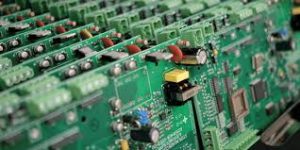
How do advancements in robotics impact circuit board assembly services automation?
Collaborative robots, or cobots, are designed to work alongside human operators in circuit board assembly services, performing repetitive or physically demanding tasks while ensuring safety and flexibility in dynamic production environments. Unlike traditional industrial robots confined to safety cages, cobots feature advanced sensors and programming capabilities that allow them to detect and respond to human presence, enabling close collaboration and interaction on assembly lines.
Advancements in robotics technology have also led to the development of integrated automation solutions that combine robotic systems with other advanced technologies such as artificial intelligence (AI), machine vision, and data analytics. These integrated systems enable real-time monitoring and optimization of assembly processes, predictive maintenance of robotic equipment, and adaptive control strategies to enhance productivity and quality in circuit board assembly services.
Furthermore, robotics advancements have facilitated the implementation of lights-out manufacturing, wherein assembly processes operate autonomously without human intervention for extended periods, typically overnight or during weekends. Lights-out manufacturing relies on robotic systems equipped with sensors, cameras, and automated quality control mechanisms to ensure uninterrupted operation and timely detection and resolution of issues, maximizing throughput and efficiency while minimizing labor costs and cycle times.
The adoption of robotics in circuit board assembly services is driven by various factors, including increasing labor costs, growing demand for high-volume production, and the need for greater flexibility and agility in response to changing market dynamics. By automating repetitive and standardized tasks, robotics technology frees up human operators to focus on more complex and value-added activities such as design optimization, process improvement, and quality assurance, thereby driving innovation and competitiveness in the electronics industry.
However, the widespread adoption of robotics in circuit board assembly services also presents challenges, including initial investment costs, integration complexities, and workforce training requirements. Manufacturers must carefully evaluate their production requirements, cost-benefit analysis, and long-term strategic goals when considering investments in robotics automation to ensure optimal returns on investment and sustainable growth.
In conclusion, advancements in robotics technology are transforming circuit board assembly services by driving automation, efficiency, and innovation in manufacturing processes. Robotic arms, AGVs, cobots, and integrated automation solutions enable precision, scalability, and flexibility in electronic assembly, empowering manufacturers to meet the demands of today’s dynamic market while maintaining competitiveness and sustainability in the long run.