

flexible PCBs be manufactured
The primary materials for flexible PCBs are polyimide base layers and copper foil. In the manufacture of a flex circuit board, copper is typically plated using vacuum immersion processes. Once the copper is plated, the next step in the flex circuit board fabrication process is the application of an insulating coating, known as a coverlay or covercoat. The purpose of the coverlay is to provide comprehensive protection for the flex circuit board against aggressive environmental conditions, chemicals, and solvents. In most cases, cover lays are made from polyimide films with adhesives.
For prototype and low-volume production runs, a flexible pcb manufacture is cut out from the insulating film using a blanking knife. This method is a less costly alternative to the high-volume cost-effective blanking process that utilizes a hydraulic punch and die set.
Unlike mechanical routing systems, lasers do not leave an undesirable ragged edge on the surface of a flex circuit. In addition, laser cutting offers a more accurate and precise hole diameter. The narrow cutting beam of a laser allows for much smaller and intricately shaped slots and cutouts than can be achieved by mechanical routers.
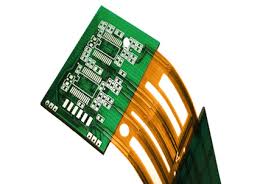
Can flexible PCBs be manufactured with laser drilling?
Laser drilling can be used to create both blind and buried vias in a flexible circuit board. However, a number of factors must be taken into consideration in order to ensure a good outcome. One of the most important is ensuring that the stack-up non-homogeneity is matched to the hole size. For example, a laser system needs to be able to distinguish between different materials in the stack-up, such as FR-4 and glass fibers. If the stack-up is not matched to the desired hole size, the laser will not be able to accurately and precisely cut through the layer.
Another factor is the choice of the optimum laser wavelength for the application. Different materials absorb the laser at different rates. Choosing the appropriate laser wavelength can reduce or eliminate the need for post-processing. In this way, the overall process can be more efficient and economical.
Finally, the laser power and the focusing optics are also important considerations. The laser must be strong enough to ablate the insulating material and create a clean hole without damage to the copper layers beneath it. ESI’s flex PCB laser processing systems excel in accuracy, power control, and reliability, making them the solution of choice for many top PCB manufacturers worldwide.
To ensure the best results when laser drilling a flex circuit board, it is important to consult with an experienced PCB manufacturer. A reputable company will have years of experience in manufacturing flex circuits for a wide variety of applications, including consumer electronics, automotive, military, and medical devices. The expert engineers at ESI are ready to discuss your requirements and the optimal PCB design for your unique application. Contact us today for more information about our advanced flex circuit fabrication services and to request a quote. We look forward to working with you!