

Weight of Flexible Circuits
Modern electronics manufacturers face contradictory requirements: they must be light in weight, rugged enough to survive the mechanical stress of moving parts and other environmental factors, and cost-effective. These demands make flex circuits an attractive alternative to traditional PCBs that use hand-wired connections.
The most common flex circuit materials are polyimide (sometimes known by the brand name Kapton) and polyethylene terephthalate (PET). Both offer good mechanical resistance, high temperature tolerances, and chemical stability. They are also lightweight, making them a perfect choice for applications where space is at a premium.
Multi-layer flexible circuits can be made in several different construction styles, including single-sided, double-sided, and hybrid. However, single-sided flex circuits are the most common because they can be easily bent to fit complex shapes without damaging the copper. Single-sided flex circuits also have the advantage of being easier to assemble, since no soldering is required.
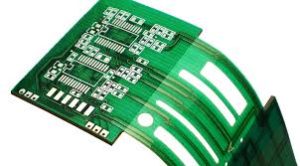
How Does the Weight of Flexible Circuits Compare to Traditional PCBs?
Single-sided flex circuits are usually cladded with electro-deposited copper (EDC) or rolled annealed copper (RBAC). EDC is typically the most cost-effective, but RBAC offers better conductor densities and performance in dynamic bending applications. It is important to understand the requirements of your end-use case so you can choose the right fabrication process for your needs.
A flex circuit’s thickness can be measured with a micrometer or an optical profiler, but it is not practical to weigh the entire component as a whole. For one, a fabricated flex circuit will have had numerous processes applied to it that will add or subtract material. Moreover, a fabricated flex circuit is prone to movement and contraction that will affect the drill-to-copper distance. It is therefore essential to consult your fabricator when designing your circuit to ensure that it will perform as intended in your final product.
Compared to rigid PCBs, flexible circuits have lower mass because they are more compact. They also allow designers to reorganize electronic components into smaller spaces, reducing the number and size of connections. This can significantly reduce the overall assembly costs and the amount of space occupied by electronic components. It can also simplify the design and assembly process, which in turn reduces the overall time to market for a new electronic device.
Another reason that flex circuits are so popular is because they can be used in a wide variety of applications. They can be integrated into curved mechanical spaces that would be challenging to fit with traditional connections, such as the foldable displays of smartphones or tablet computers. They can also be used in medical devices like glucometers, insulin pumps, and respiratory equipment for hospitals, or in tubular components with small diameters.
In fact, flex circuits can be folded, twisted, bended, and even dynamically flexed millions of times without the conductive layers cracking or breaking. This makes them ideal for use in any application that will see a lot of movement. This includes replacing wire harnesses in automobiles, rockets, and satellites. They can also be used to connect electrical sub-assemblies, allowing the manufacturer to reduce the weight of the overall assembly while retaining its function.